Voronoi, hexagons or radial rings: choosing a grid
The grid decides how a parametric wall panel reads from across the room: Voronoi cells, hexagons or radial rings, with real examples.
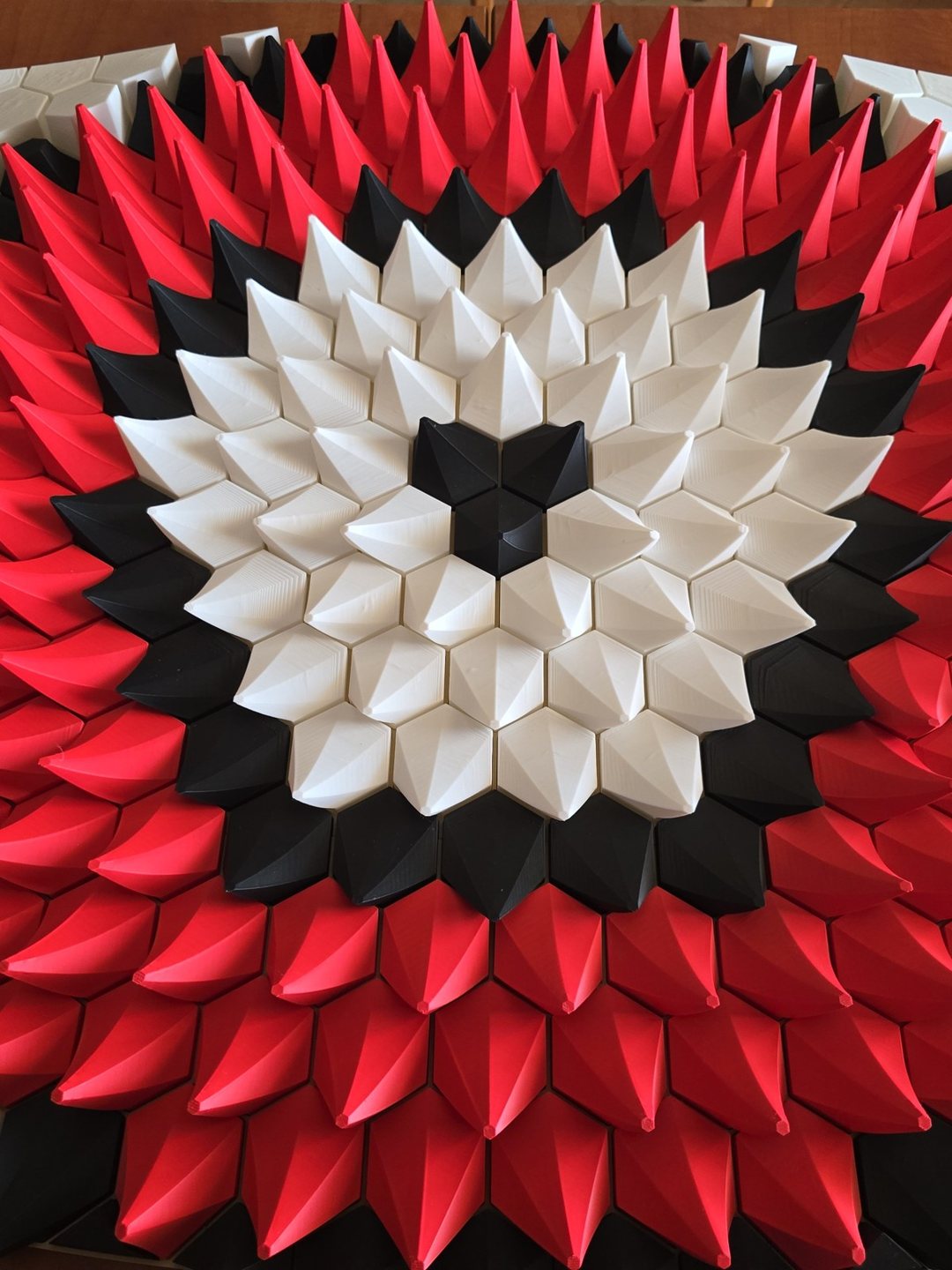
In Parete you choose a grid first, then a pattern on top of it. The grid is the character of the panel.
Voronoi cells
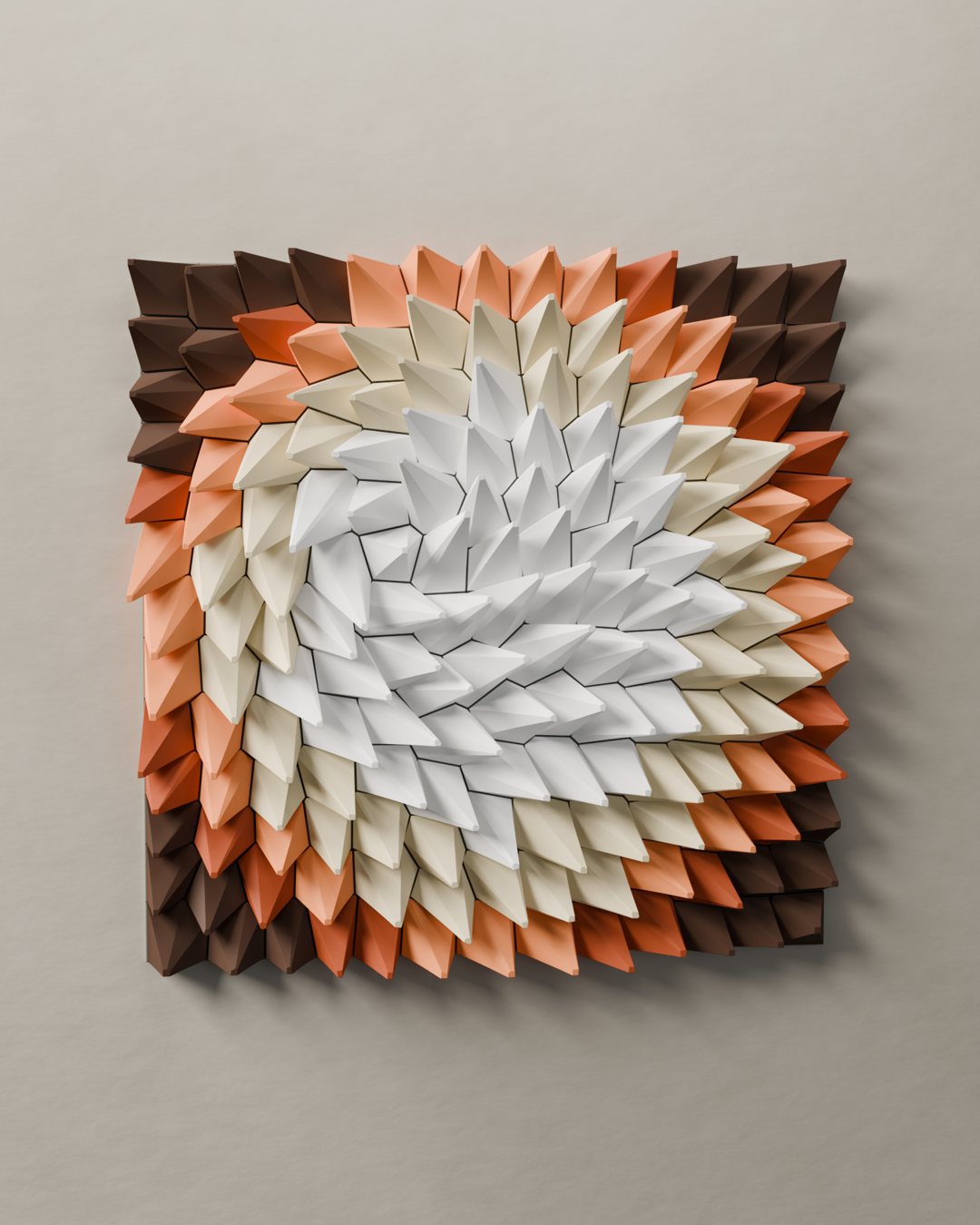
Irregular, organic cells. Vortices read beautifully here, because no row or column fights the spiral. Ember and Fern Arch use Voronoi cells.
Hexagons
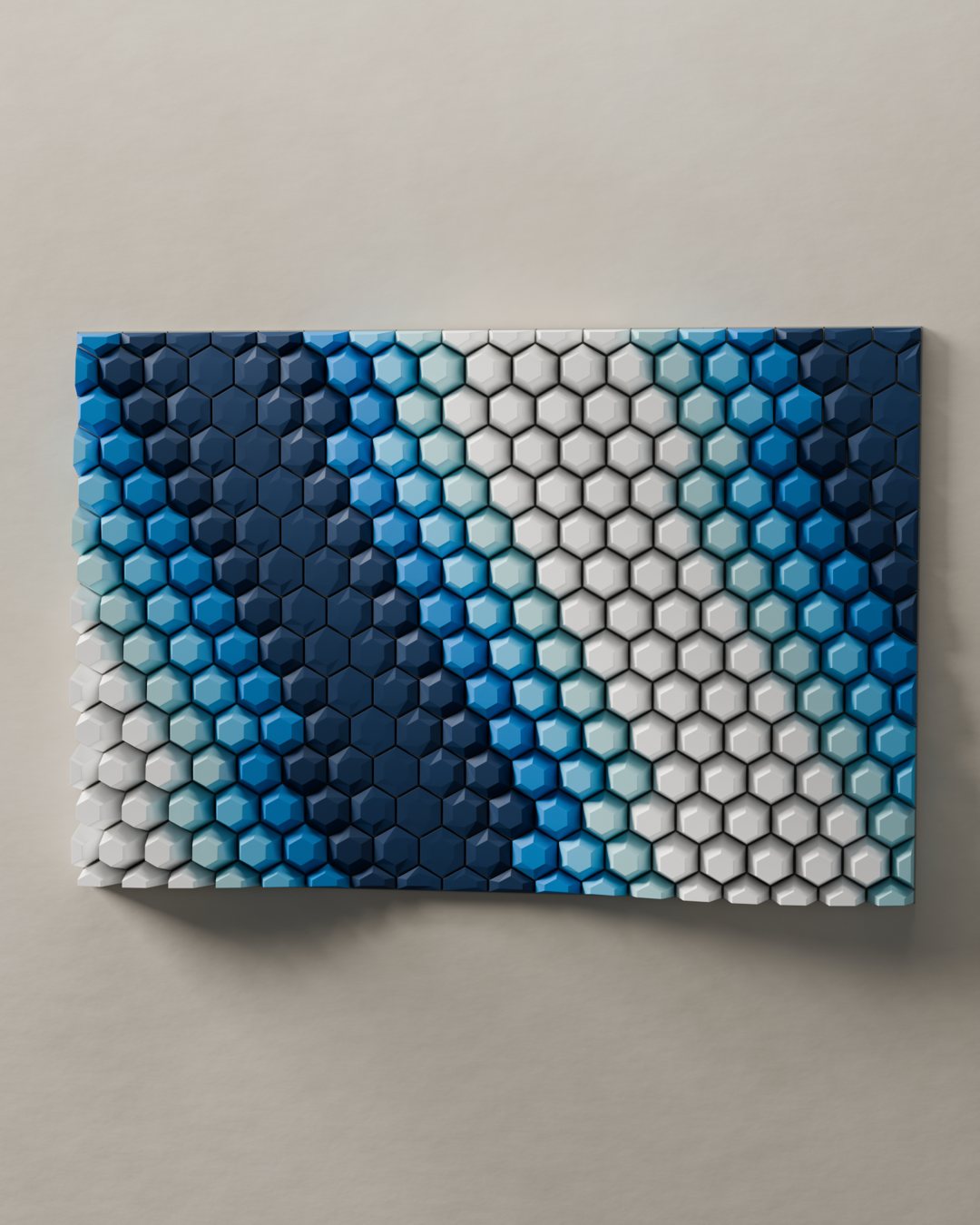
Calm and regular, like a honeycomb. With sloping flat tops they become scales or terraces. Glacier, Lagoon and Citrus Scales are hexagons.
Radial rings
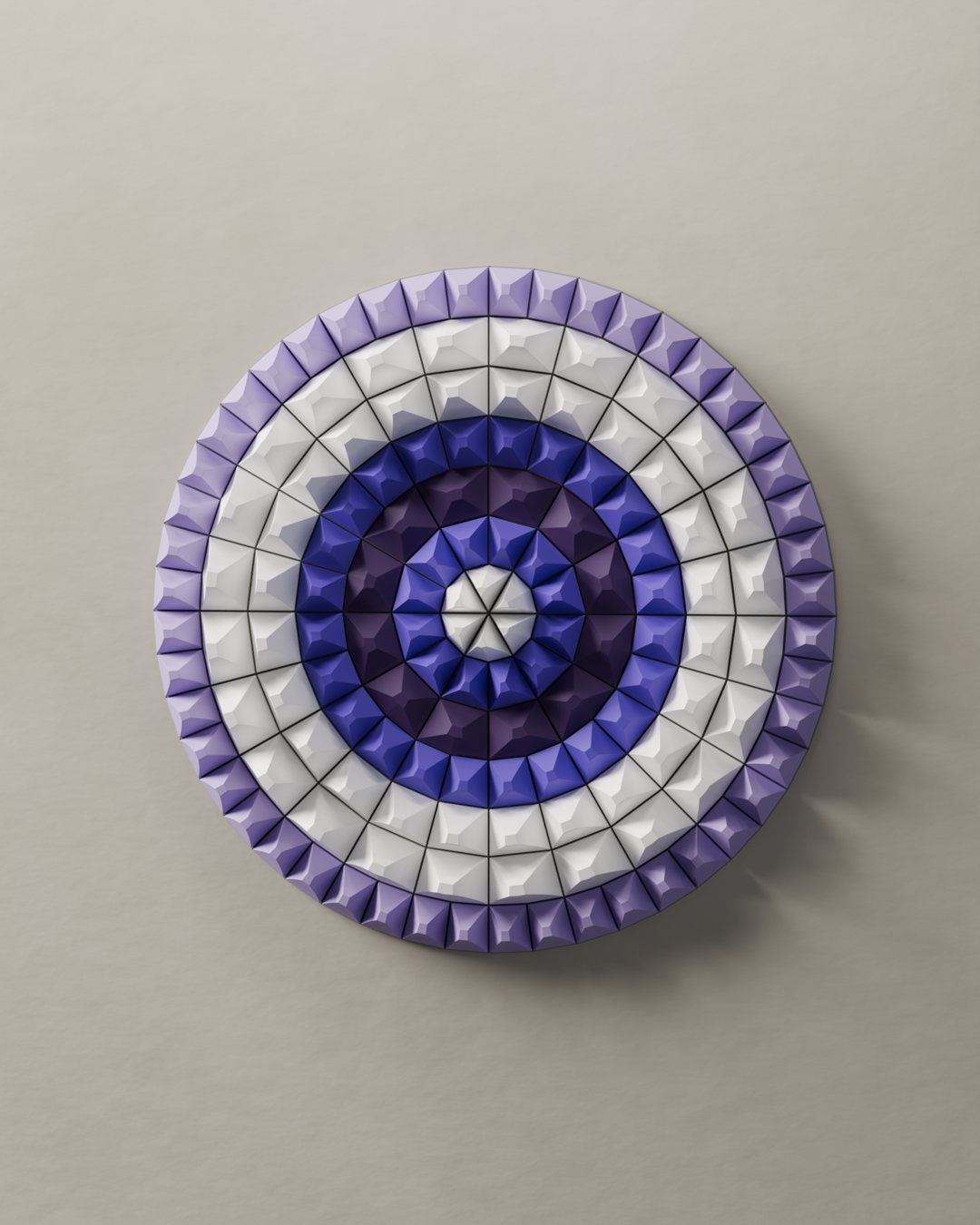
Pieces set in concentric rings around the centre, for round panels and craters. Lilac Bloom is radial.
Squares and triangles
Squares are the most architectural, triangles the finest. Both are in Parete too.
Whatever the grid, Parete checks every pair of neighbours and shortens the few blades that would touch, so there is always a real gap between the pieces.